Saudi Arabia is undergoing an extraordinary transformation thanks to the successful execution of Vision 2030. This ambitious plan has not only diversified the economy but also welcomed international investment, propelling the private sector.
The influx of foreign direct investment, particularly in colossal projects, is set to inject nearly $4 trillion into the Saudi economy through Vision 2030. This surge has propelled Saudi Arabia among the world’s fastest-growing major economies, securing its position as a stable and dynamic investment hub.
While the oil sector historically fueled growth, a concerted effort to reform the non-oil economy has seen the non-oil economy grow at over 5% in 2023. With a target of 65% private sector contribution to GDP by 2030, fast-growing sectors like real estate, finance, tourism, entertainment, manufacturing, and mining are creating incredible new opportunities for investors in the Kingdom. Initiatives such as the National Investment Strategy and National Tourism Strategy, and projects like NEOM, Red Sea Project, AlUla, and Diriyah Gate, are making Saudi Arabia a central player on the global investment stage.
The flourishing entrepreneurial ecosystem, backed by a target of 35% SME GDP contribution by 2035, has catalyzed the digital economy, revolutionizing sectors through e-commerce and fintech.
The “Made in Saudi” campaign is amplifying local founders on the global stage, while strategic investments in infrastructure and logistics aim to position Riyadh and Jeddah as global hub for emerging industries like electric vehicles. The enduring partnership between Saudi Arabia and the USA, underscored by substantial investments and exchange, remains steadfast. As both nations continue to evolve, and Saudi Arabia’s unmatched momentum continues, the Kingdom will remain at the forefront of global investment interest.
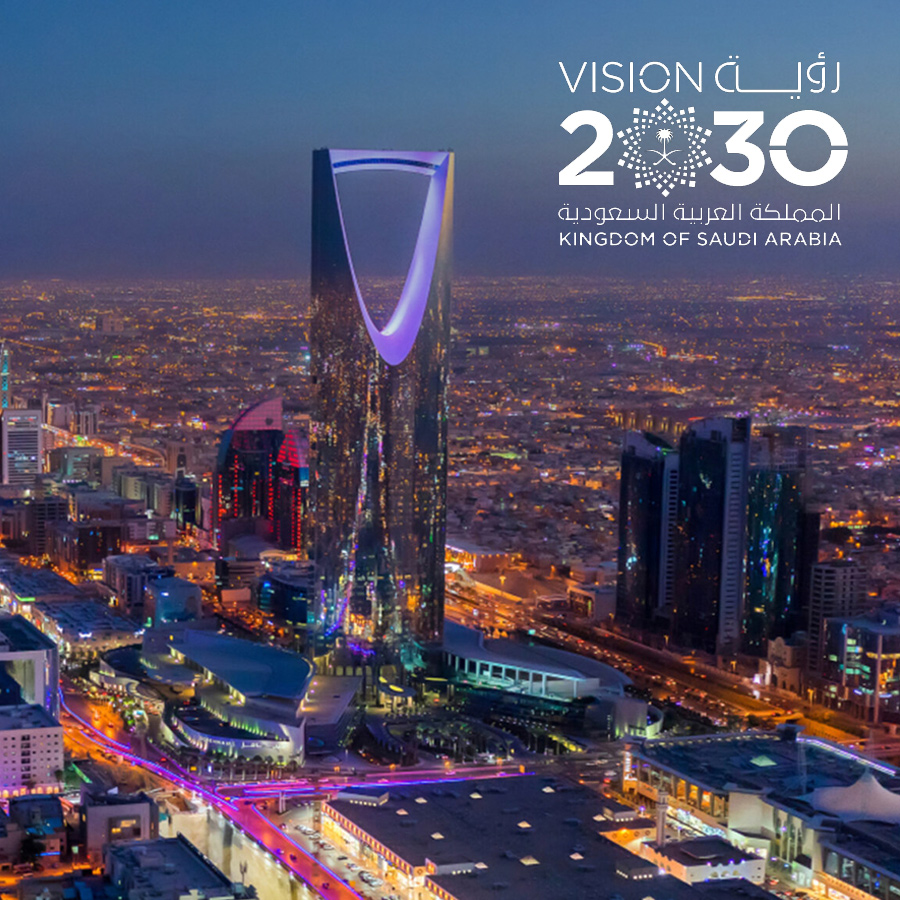
Vision 2030
Saudi Arabia’s ambitious economic and social reform plan aims to reduce the kingdom’s reliance on oil, enhance citizens’ quality of life, and create a diversified economy.
The vision centres on three pillars: a vibrant society, a thriving economy, and an ambitious nation. Key objectives include increasing non-oil sector GDP contribution from 16% to 50%, boosting FDI to over 5% of GDP, and having the private sector contribute 65% to the GDP.
Progress so far encompasses impressive economic diversification, large-scale job creation and SME development, increased female labour force participation, tourism growth through e-visas, an improved business environment for investors, and giga project launches like NEOM, the Red Sea Project, and Diriyah Gate.
National Champions
This group of key national enterprises are playing a pivotal roles in the Kingdom’s energy, oil, petrochemicals, telecommunications, and utilities sectors.
World leaders such as Saudi Aramco, the world’s most profitable company and top global oil producer, and SABIC one of the 5 largest petrochemical producers worldwide, are key drivers of growth in the Kingdom.
Others like SAUDIA, Mawani, Ma’aden, Riyad Bank, Al Rajhi Bank, SAOC, STC, SPL, SEC and SAR likewise not only exist as significant influences on the GDP but play an increasingly large role in the regional economy. Their crucial role in realizing the Vision 2030 are building Saudi Arabia’s international competitiveness and expanding the Kingdom’s global footprint.

Entrepreneurs and the start-up ecosystem
In line with Vision 2030’s goal of SMEs contributing 35% to GDP, Saudi Arabia has placed a major emphasis on developing a competitive start-up ecosystem. Since 2020, SMEs have surged from 500,000 to 1.2 million, with over 85% of Saudis saying positive market conditions make them interested in starting a business.
While the ecosystem has a strong focus on ICT, fintech, e-commerce, fast emerging sectors include real estate, healthcare, tourism, logistics, sports, education, and professional services. Likewise, the ecosystem is increasingly inclusive, with 40% of start-ups founded by women or youth. Funding for Saudi start-ups has skyrocketed, with $2.4 billion in investment allocated for startup growth by investors in 2023.
Entities like SIDF and Monsha’at playing a pivotal role in attracting financieers and investors to the ecosystem. As the Saudi ecosystem grows and evolves, further investment in Saudi human capital through training, mentorship and boosting investor interest will be crucial for the next generation of start-up founders.
Developing Saudi talent
The “Made in Saudi” and Saudization initiatives are prioritizing boosting the skillsets and inclusiveness of the local workforce – aiming for a 70% Saudization by 2030 and an impressive range of home-grown economic success stories. Entities like the Monsha’at Academy and SIDF Academy, alongside key universities like King Abdulaziz, King Saud, and Princess Nourah bint Abdulrahman are playing a key role in shaping the next generation of Saudi leaders for business and public life.
Likewise, important regional incubation hubs like 500-Startups, Techstars Riyadh, Waed and SVC are creating opportunities for rapid business growth for promising Saudi talent.
The vibrancy of the Kingdom and its variety of economic opportunities on offer are making this not only the right time for international investment, but also for local talent to realize their dreams and ambitions.
Real Estate
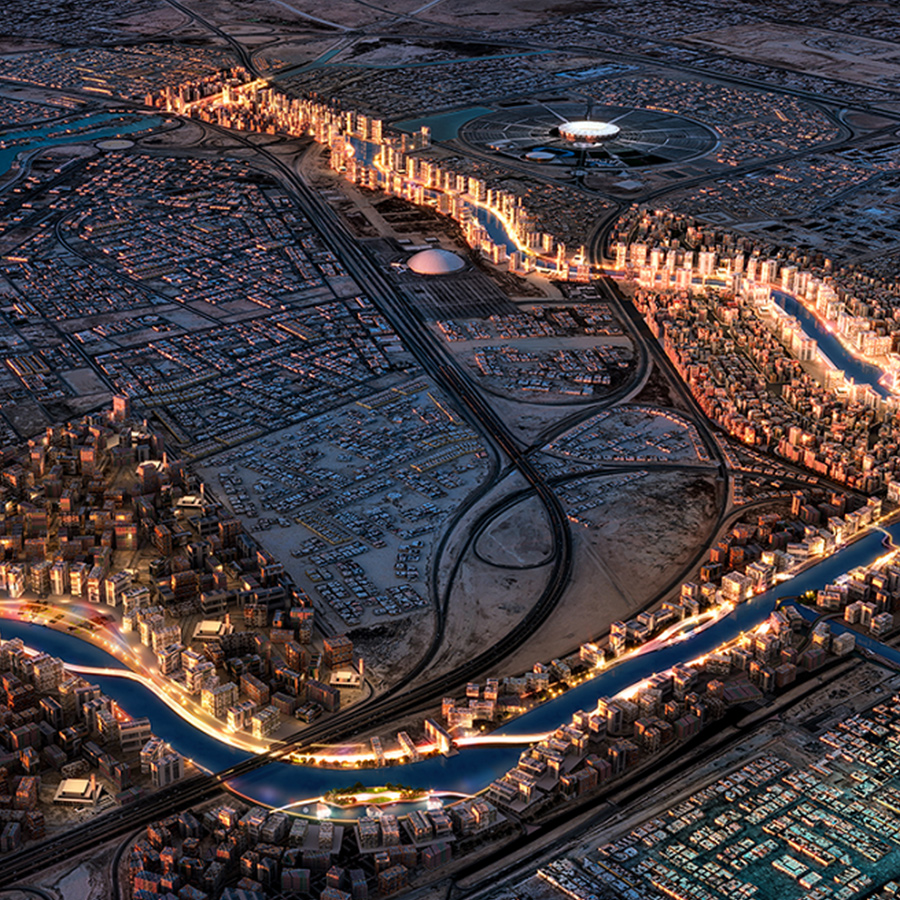
Leading some of the largest construction projects in the world, Saudi Arabia’s incredible economic transformation is driven in large part by its booming real estate market. With Vision 2030 prioritizing economic diversification and quality of life, the growth of residential, commercial, mixed-use and luxury real estate options has taken off in recent years.
The Saudi government has also set a target of 70% homeowners, and so entities like the national community developer, ROSHN, are playing a key role in developing inclusive, sustainable living projects on a large scale. ROSHN, with its $90 billion budget, sees projects like SEDRA in Riyadh and Marafi in Jeddah as central to recreating life and living in Saudi for over 200,000 future inhabitants.
Likewise, the NEOM, Red Sea, Diriyah Gate, and Qiddiyah giga-projects are creating incredible opportunities for real estate investment. NEOM’s The Line and Oxagon are two such projects – completely reimagining the way urban design works.
Tourism
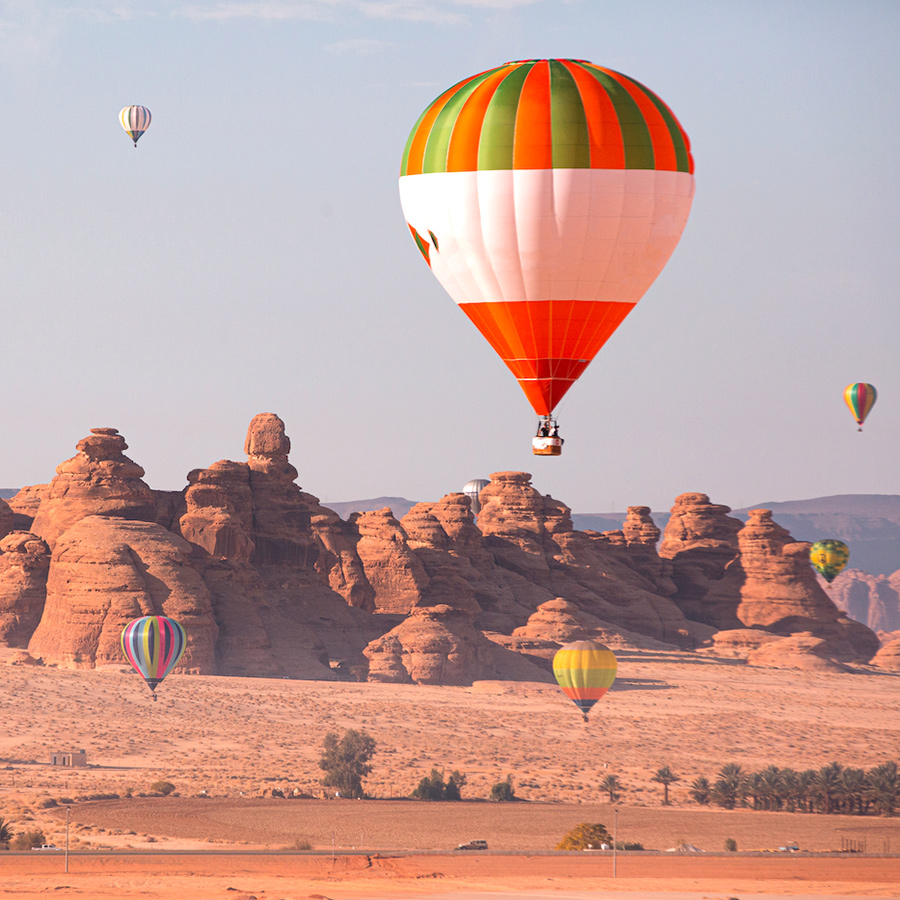
As the second fastest growing tourism market in the world in 2022, Saudi Arabia is fast emerging as a major player in the global tourism industry. Home to the Two Holy Mosques, the Kingdom has long drawn pilgrims from around the world to Makkah and Madina – and is now expanding this offering by tapping into the many hidden treasures on offer in the Kingdom.
From the unspoilt shores of the Red Sea to the mountains of Jazan or the ancient cities of Diriyah and AlUla, Saudi Arabia is the last true frontier for global tourists. Known for its warm hospitality and ancient culture, the Kingdom is rapidly expanding its global reach in tourism, with SAUDIA Airlines, flynas, flyadeal and the newly launched Riyadh Air playing key roles in drawing visitors to Saudi Arabia. Vision 2030 has set a target for tourism to contribute 10% to GDP, while attracting 150 million visitors. As the Kingdom moves toward this goal, the opportunity for tourism investment – particularly in the enchanting NEOM, Red Sea, AlUla and Diriyah Gate projects – will continue to expand.
Sports and Entertainment
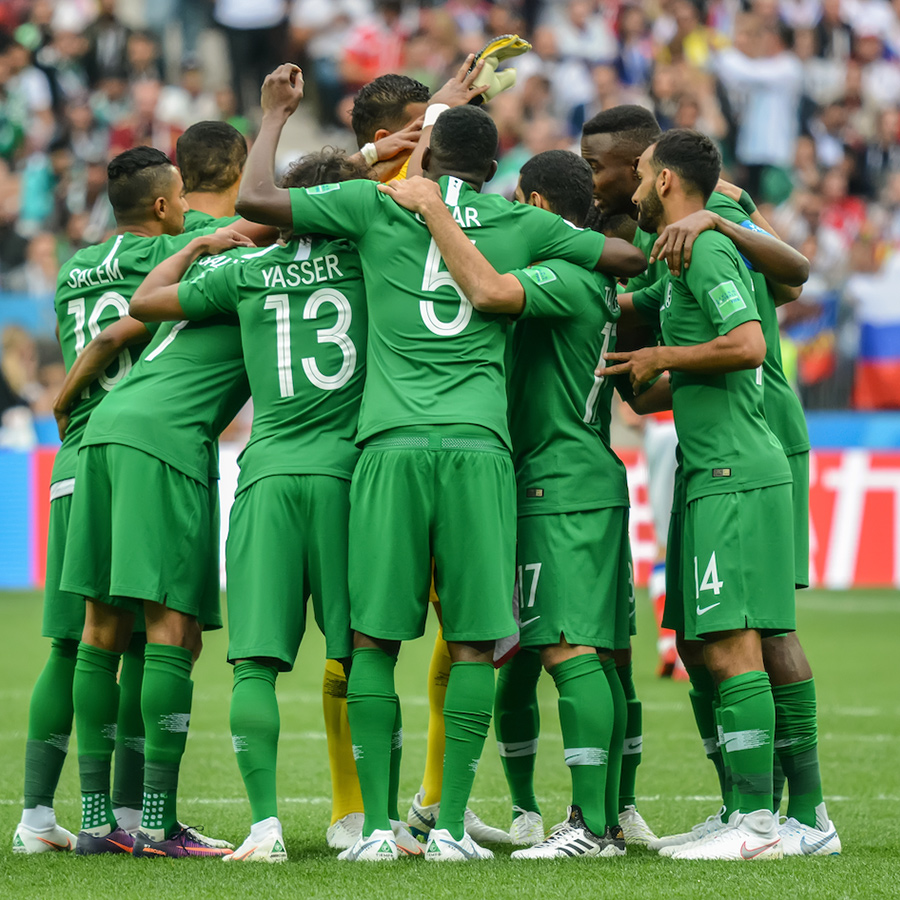
Saudi Arabia’s foray into sports and entertainment is reshaping the global landscape. Privatization of football clubs, ground-breaking mergers, and high-profile player transfers is drawing the attention of many new fans from around the world. While Saudi Arabia’s formidable LIV Golf tournament is taking the world by storm, the Kingdom is bringing global attention to the Saudi Pro League. While this burgeoning football tournament has already signed global superstars like Christiano Ronaldo, a transfer budget of nearly $1 billion will see the likes of Neymar, Karim Benzema, and Aymeric Laporte all move to clubs in Saudi Arabia for lucrative offers. So too, Jeddah is now a mainstay on the F1 calendar, Saudi Arabia is set to host the Asia Winter Games in NEOM in 2028, and there are talks of bidding for the 2034 FIFA World Cup. Through major events like Riyadh Season and Jeddah Season, as well as the hosting of an array of global artists for major concerts, the Kingdom’s entertainment industry is also kicking off. While projects like Diriyah Gate and Al-Balad offer visitors insight into the Kingdom’s rich culture and history, Six Flags Qiddiyah will position Saudi Arabia as a fun and dynamic new destination.
Banking, Finance and Fintech
With the Saudi Stock Exchange, Tadawul, now counting among the top 10 global bourses with a market capitalisation of $2.6 billion, the Kingdom’s financial services sector has experienced strong growth in recent years. Marked by a range of reforms which has seen the dynamic banking sector reposition itself as a key driver of growth, diversification and investment in Vision 2030 projects, the Kingdom’s strong economic performance is spurring on the banking sector for future growth.
While regional leaders like SNB, Riyad Bank, Al Rajhi, SABB, and ANB account for over 60% of the local banking market, these and other major players are pursuing partnerships with emerging fintech’s who are quickly transforming the digital landscape of the sector. With the support of the Saudi Central Bank (SAMA) and Fintech Saudi, fast-growing companies like Hala, Tamara, PayTabs and Lean Technologies are creating innovative, digitized solutions for modern consumers.
Path to Net Zero
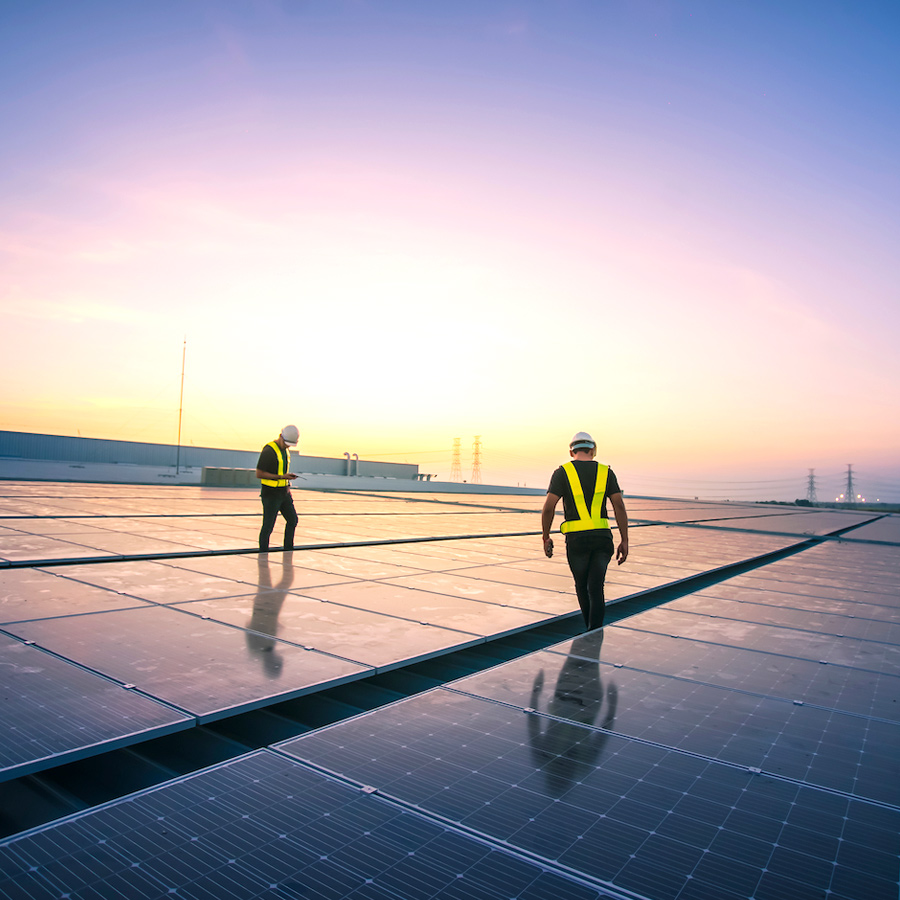
Following the launch of Vision 2030, Saudi Arabia has taken decisive steps toward building a more sustainable future, making a major push in the low carbon and green economy. Inaugurated in 2021, the Saudi Green Initiative unites aims to offset and reduce emissions in the Kingdom, increasing is use of clean energy while addressing climate change. With the goal of planting over 1 billion trees, invest heavily in green hydrogen and produce 58.7 GW of renewables through Vision 2030, the Kingdom is set to become a regional green economic powerhouse. Major projects spearheaded by companies like ACWA Power, EDF and Masdar, include the region’s largest wind farm at Dumat Al Jandal of 400 MW, and 700 MW Yanbu wind power plant. Likewise, investment in solar has seen the development of the world’s largest single-site solar-power plant in Al Shuaibah by ACWA Power and Badeel, which will see 2,060 MW being generated. A further exciting development is the NEOM Green Hydrogen Company, which is investing $8.4 billion into the development of green ammonia carbon-free hydrogen. This project will see over 600 tonnes p/day of green hydrogen produced to drive NEOM’s energy supply, and has the potential to transform hard-to-abate industrial sectors in the global pursuit of Net Zero.
Technology and Innovation
The 21st century may yet prove to be another golden age of innovation, transformation and knowledge exchange for the Middle East and Gulf region, in particular. As the Kingdom looks to take a major leap into a high-tech future, with the launch of a $200 million fund for investments in local and international high-tech companies. With major international tech leaders, including Microsoft, Oracle and Amazon already pledging over $9 billion in investments in the local tech ecosystem, Saudi Arabia is looking to speed up its adoption and integration of the latest innovations. With ICT solutions like AI, IoT, big data, and advanced manufacturing transforming industries, the Kingdom is expected to invest over $34 billion in coming years in ICT technologies. Setting the goal of allocating 2.5% of GDP into research, development, and innovation by 2040, the Saudi government is looking to attract top minds, entrepreneurs, inventors, and innovators to the Kingdom to build this tech-driven future. As projects like NEOM’s Innovation Hub will focus on addressing some of the main challenges facing the world today, Saudi Arabia looks to become a beacon of knowledge and innovation for the world.